

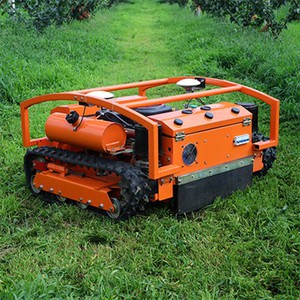
The landscaping industry is undergoing a profound technological transformation. What was once a labor-intensive trade-relying almost entirely on manual push mowers and ride-on tractors-is rapidly evolving into a technology-driven sector. Automation, artificial intelligence, sensor integration, and connectivity are reshaping how outdoor spaces are maintained. At the heart of this shift is a new generation of intelligent equipment designed to work smarter, not harder. The remote control lawn mower represents a key step toward these more efficient, data-enabled outdoor maintenance solutions, bridging the gap between traditional operation and fully autonomous systems.
The Rise of Smart Equipment
Modern landscaping equipment increasingly integrates capabilities that would have seemed futuristic just a decade ago. These include:
- Intelligent control systems – Microprocessors and onboard computers manage engine performance, blade engagement, and traction control in real time, adjusting to terrain conditions without operator intervention.
- Automation capabilities – Programmable mowing schedules, automatic docking for battery charging, and GPS-based navigation are becoming standard features on advanced models.
- Data-driven operation – Machines can record mowing hours, fuel consumption, blade wear, and terrain profiles. This data helps fleet managers optimize maintenance schedules and predict part replacements before failures occur.
According to industry analysis, the global market for smart landscaping equipment is expanding rapidly as commercial operators recognize the return on investment offered by reduced labor costs and increased productivity. Smart mowers are no longer a niche product; they are becoming the new baseline for competitive landscaping businesses.
How Remote-Controlled Mowers Fit into Smart Landscaping
Remote-controlled mowing equipment occupies an important middle ground between fully manual operation and fully autonomous robotic mowers. Unlike autonomous units that operate without direct human input, remote-controlled machines keep a skilled operator in the loop-but at a safe distance. This hybrid approach offers several advantages in the transition toward smarter workflows:
- Human oversight with machine efficiency – The operator can intervene instantly if unexpected obstacles or conditions arise, something fully autonomous systems still struggle with.
- Flexibility across varied sites – Unlike autonomous mowers that require perimeter wires or extensive mapping, remote-controlled units can be deployed to new locations immediately, making them ideal for contractors who work on multiple, changing job sites.
- Cost-effective automation – Remote-controlled machines provide many of the productivity benefits of automation without the high cost of full autonomy, making them accessible to a wider range of businesses.
Integration with Smart Workflows
One of the most promising aspects of remote-controlled mowing equipment is how well it integrates into broader digital workflows. Forward-thinking landscaping companies are incorporating these machines into:
- Scheduled maintenance plans – Using software platforms, managers can assign specific mowing tasks to operators, track completion times, and adjust schedules based on weather or equipment availability.
- Multi-machine coordination – A single operator can manage two or three remote-controlled mowers simultaneously on large, open sites, significantly boosting output per labor hour. Some advanced systems allow one remote to control multiple units in sequence or in parallel.
- Large-scale project management – For major infrastructure projects, airport grounds, or solar farms, remote-controlled mowers can be coordinated with other equipment-sprayers, aerators, sweepers-to create efficient, synchronized maintenance operations.
- Cloud-based fleet tracking – Managers can monitor the location, status, and performance of every machine in real time from a smartphone or office computer, enabling rapid response to issues and better resource allocation.
Efficiency and Digital Transformation
The digital transformation of landscaping is not just about technology; it is about results. Businesses that adopt remote-controlled and smart mowing equipment consistently report:
- Optimized labor allocation – Skilled workers are freed from repetitive, physically demanding tasks and redeployed to higher-value activities such as fine pruning, irrigation repair, or client consultation.
- Improved consistency – Machines do not get tired, distracted, or have off days. Every pass is as precise as the last, resulting in uniform cut quality across entire properties.
- Reduced downtime – Predictive maintenance alerts and remote diagnostics minimize unexpected breakdowns. Many issues can be identified and addressed before they cause a work stoppage.
Industry data suggests that landscaping operations integrating smart mowing technologies see productivity gains of 30-50% compared to traditional methods. For commercial operators, this translates directly into the ability to bid more competitively, complete projects faster, and increase annual revenue without adding headcount.
Future Trends in Smart Landscaping
Looking ahead, several emerging trends will further transform the role of remote-controlled mowing equipment:
AI-Powered Obstacle Detection – Next-generation mowers are being equipped with cameras and machine learning algorithms that can identify and avoid obstacles such as toys, hoses, rocks, and even small animals. This reduces the need for operator intervention and allows safer operation in complex environments.
5G Connectivity and Remote Operation – With the rollout of 5G networks, the latency between remote control and machine response will drop to near-instantaneous levels. This will enable operators to control mowers from miles away, potentially from a centralized command center serving multiple sites.
Integration with Smart City Infrastructure – Municipalities are beginning to explore how remote-controlled mowers can communicate with traffic management systems, public safety networks, and environmental sensors. A mower working on a roadside embankment could, for example, receive real-time traffic alerts and automatically adjust its position to avoid peak traffic hours.
Battery Technology Advances – Improvements in lithium-ion battery density and charging speed are extending runtimes while reducing weight. Swappable battery systems allow continuous operation across multiple shifts, and wireless charging pads embedded in storage depots can top up batteries automatically between uses.
Digital Twin Simulation – Before a mowing season begins, operators may use digital twin software to simulate machine performance across their properties, identifying optimal routes, potential trouble spots, and maintenance needs-all without turning a wheel.
Chengfeng's Innovation Direction
Chengfeng Machinery recognizes that the future of landscaping lies at the intersection of mechanical engineering and digital technology. The company continues to invest significantly in research and development, collaborating with technical research institutions to advance control system capabilities and machine intelligence. Current development priorities include:
- Enhanced remote control interfaces – Developing more intuitive, tablet-based control systems that provide real-time video feedback, terrain mapping, and performance analytics.
- Semi-autonomous navigation – Building on their remote-controlled foundation, Chengfeng is exploring features such as boundary detection, pattern mowing, and automatic return-to-base for refueling or recharging.
- Fleet management software – Creating cloud-based platforms that allow commercial customers to monitor, schedule, and analyze the performance of their entire mower fleet from any device.
- Durability for the digital age – Ensuring that all smart components are ruggedized for outdoor use, with sealed connectors, vibration-resistant mounts, and weatherproof enclosures.
By maintaining a focus on practical, field-tested innovation rather than untested concepts, Chengfeng aims to deliver smart landscaping solutions that work reliably in the real-world conditions their customers face every day.
FAQ
Q1: Are these machines fully autonomous?
Currently, most remote-controlled mowers are semi-automated. They require an operator to control movement and cutting functions, though many models offer programmable patterns and automated safety features. Fully autonomous mowers exist but are typically limited to smaller, simpler properties.
Q2: Can they be integrated into smart systems?
Yes, integration is a growing trend. Many remote-controlled mowers can connect to fleet management software, GPS tracking, and cloud-based analytics platforms. Future models will likely offer direct integration with smart city infrastructure and building management systems.
Q3: Do they improve operational planning?
Absolutely, especially for large-scale projects. Data collected by the mowers-such as time per acre, fuel usage, and terrain difficulty-helps managers create accurate bids, schedule crews efficiently, and identify which properties are most profitable to maintain.
Q4: What skills do operators need for smart mowing equipment?
Basic remote control operation requires minimal training, as modern interfaces are designed to be intuitive. However, maximizing the benefits of data analytics, fleet management software, and advanced features does require some digital literacy. Most manufacturers, including Chengfeng, provide training resources and technical support.
Conclusion
As smart landscaping continues to evolve, remote-controlled mowing equipment is positioned to become a core component of future outdoor maintenance systems. By offering a practical balance of human oversight and automated efficiency, these machines enable landscaping businesses to scale their operations, improve service quality, and reduce costs. Whether for a municipal parks department, a commercial landscaping contractor, or an agricultural operation, investing in smart mowing technology today is an investment in competitiveness tomorrow. The lawn care industry is changing-and remote-controlled equipment is leading the way.


